
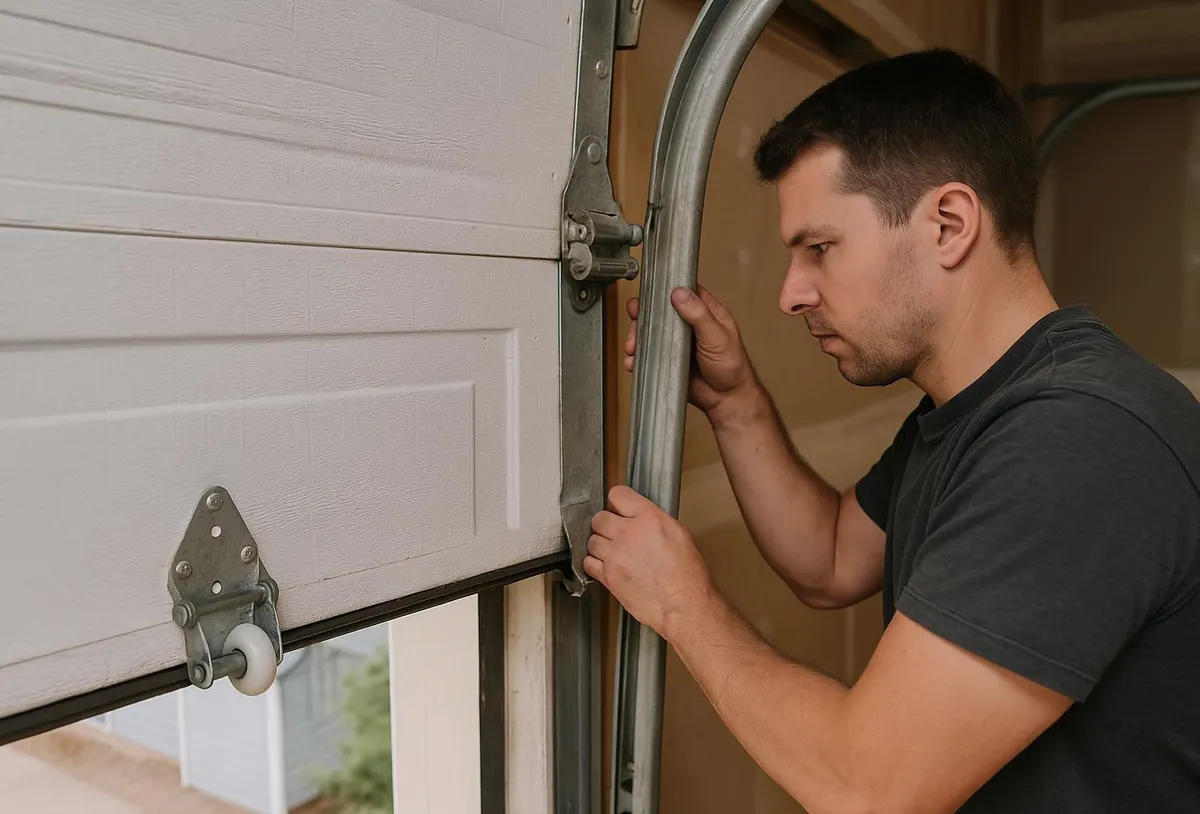
A typical call this time of year starts the same way: a homeowner heard a bang during a windy night, went out the next morning, and found a garage door panel bowed outward or a door that's popped off one of its tracks. Sometimes it's worse — the whole door is leaning in the frame and won't open or close. When a technician gets out there, the cause is almost always the same thing: the door's hardware was already weak, and a strong gust just finished the job.
Why the Garage Door Is a Home's Weakest Wall
Every other wall in a house is a solid, continuous structure tied into the frame. A garage door is not. It's a large panel made of thin sections, hung on tracks, held up by springs, and moved by rollers riding in a channel. That's a lot of moving parts holding back a big surface area of wind pressure. When wind hits a garage door hard enough, it can push the door inward, pull it outward, or rattle it off the tracks entirely — and once a garage door fails in a storm, wind gets inside the structure and can lift the roof or blow out walls from the inside. That's why building codes in high-wind regions often call out garage doors specifically; they're the single largest opening in most homes.
What Fall Weather in This Area Does to That Weak Point
Indiana's fall isn't tornado season, but it brings its own wind risk: strong cold fronts moving through can produce sudden gusts, and those gusts often show up with little warning compared to a slow-moving storm system. A door that's been fine all summer can suddenly reveal weak spots once wind loads start hitting it regularly. This is also the point in the year when it's worth getting ahead of problems before cold weather sets in, since once ice and salt arrive, outdoor repairs get harder and slower, and a door that's already stressed from wind is more likely to bind or jam when temperatures drop.
Common Symptoms That Show Up After Windy Stretches
- A section of the door appears slightly bowed or wavy, especially in the middle
- The door shudders or rattles noticeably during gusts, even when closed
- Rollers have worked partway out of the track
- New gaps appear along the sides or bottom where daylight wasn't visible before
- The door feels harder to open or closed unevenly after a storm
Any of these are signs the door took on more wind load than its hardware could handle cleanly, even if nothing looks dramatically broken.
A Fall Inspection Checklist
Before the next round of fall storms or the first hard freeze, walk through these checks:
- Tracks: Look for dents, bends, or spots where the track has pulled away from the wall bracket. A track that's even slightly out of alignment gives wind more room to push the door off course.
- Rollers and hinges: Worn, cracked, or rusted rollers lose their grip in the track faster under pressure. Hinges with stripped screw holes or play in the joint let panels flex more than they should.
- Panels: Check for cracks, soft spots, or old dents that have weakened the metal or wood. A previously dented panel is a likely failure point in high wind.
- Weatherstripping and bottom seal: Worn seals don't just let in cold air and moisture — gaps let wind get a grip on the door's edges.
- Springs and cables: These carry the weight of the door and keep it balanced. A door that's out of balance moves unevenly and puts uneven stress on the track during wind events.
- Bracing: Many doors, especially older ones, were never built with horizontal or vertical reinforcement struts. Without bracing, a wide door panel has nothing stopping it from flexing inward or outward under pressure.
Reinforcement Options Worth Considering
If the door is older or has never had wind-resistance features added, there are a few practical upgrades:
- Retrofit bracing kits: Horizontal struts bolted across the back of the door panels add rigidity without replacing the whole door. This is often the most cost-effective option for an otherwise sound door.
- Reinforced tracks and heavier brackets: Upgrading to commercial-grade or wind-load-rated tracks gives the door more to hold onto during gusts.
- Wind-rated doors: If the current door is old, dented, or due for replacement anyway, a wind-rated model is built with reinforced panels and track systems designed for higher pressure loads. Replacement costs for garage doors generally run from a few hundred dollars for basic models to a few thousand for insulated, reinforced, or custom options, depending on size and materials.
- Opener considerations: A door that flexes under wind puts extra strain on the opener too. If the opener is already struggling or outdated, pairing storm prep with an opener inspection or upgrade avoids a second failure point.
When to Call Anderson Garage Door
If an inspection turns up bent track, worn rollers, a bowed panel, or a door that's noticeably out of balance, that's the point to get a technician out rather than wait for the next windy night. Anderson Garage Door handles garage door repair for exactly these issues — straightening or replacing damaged track, swapping worn rollers and hinges, and correcting balance problems before they turn into a jammed or failed door. For doors that are past the point of reinforcing, garage door installation with wind-resistant features is worth discussing, especially heading into a season with both wind events and winter ice ahead. And if a storm does take a door out unexpectedly, that's what emergency garage door service is for — getting the opening secured and the door functional again without a long wait.
If you're in Anderson, Muncie, Pendleton, Chesterfield, Alexandria, Elwood, Lapel, or Frankton and want your garage door checked before the next windy stretch rolls through, call Anderson Garage Door to schedule an inspection.