
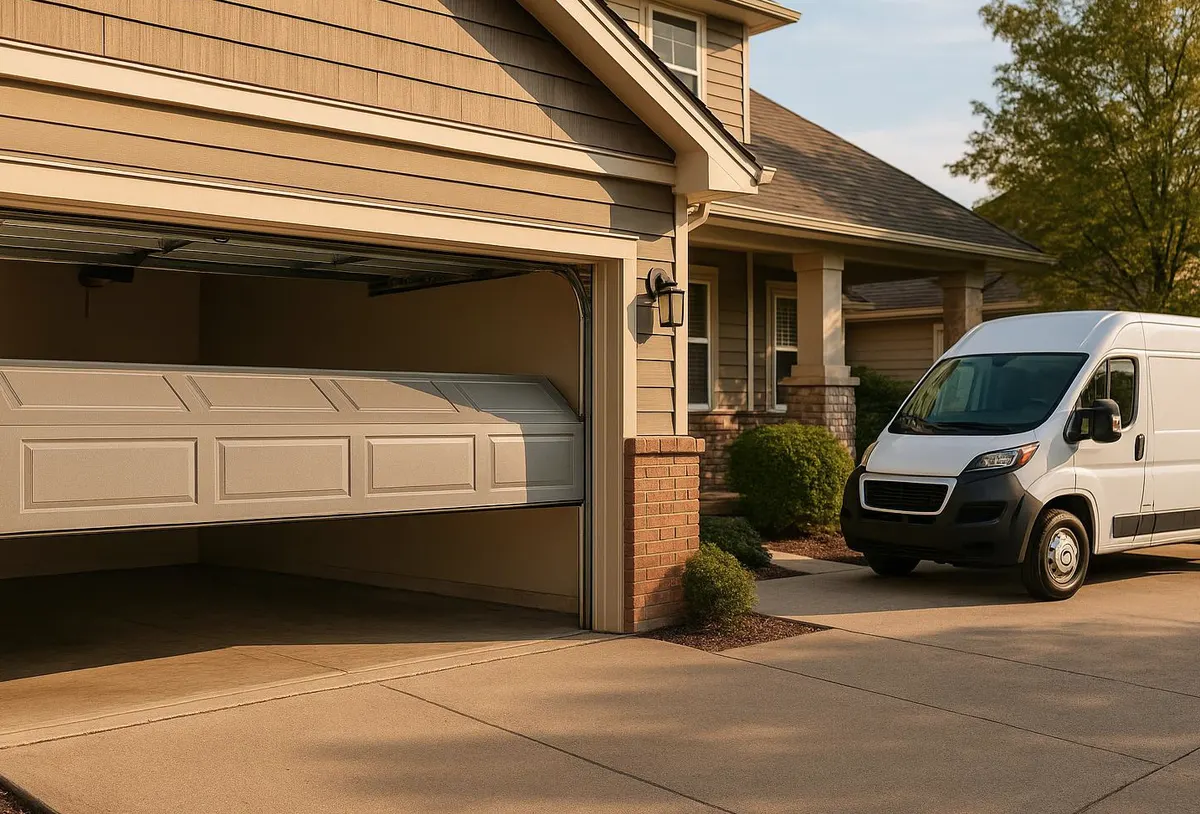
Every month you put off sealing up that garage door, you're paying for air that's leaking straight outside. With another Indiana winter rolling in, a drafty garage door attached to your house isn't just a comfort issue anymore — it's a line item on your utility bill, and it adds up fast over a full heating season.
This is usually the argument: one of you thinks the garage door is "just a garage door" and doesn't matter much. The other one notices the laundry room floor is cold, or the wall that shares space with the garage never quite warms up. Here's who's right, and why.
How a Garage Door Actually Affects Your House Temperature
If your garage is attached, it's not a separate building — it's a big, leaky room connected directly to your living space, usually through a shared wall, a door into the house, or ductwork that runs through it. When that garage gets cold, it pulls heat out of the rooms next to it. When it gets hot and humid in summer, your AC has to work harder to keep up.
The garage door itself is the biggest gap in that room's envelope. A standard door has way more surface area than a window, and most garage doors were never built — or installed — to seal as tightly as an exterior door. Add in Indiana's big seasonal swings, where you might see single digits in January and high humidity in July, and that gap gets stressed twice a year in opposite directions.
Where the Air Actually Escapes
- Bottom seal (astragal): This rubber strip along the bottom of the door is the first thing to crack, flatten, or tear — especially after a winter of scraping against ice and road salt tracked in from the driveway.
- Side and top weatherstripping: These seals dry out and shrink over time, especially with the temperature swings common here. You'll often see daylight around the edges if you check from inside with the lights off.
- Panel gaps and warping: Older steel or wood doors can warp slightly from humidity in summer, which keeps them from closing flush in winter.
- The service door or house entry door: If you've got a man-door into the garage, its seal matters just as much as the big door's.
- Uninsulated door panels: A single-layer steel door has almost no insulation value. It transfers outside temperature almost directly to the garage air.
What This Actually Costs You
You won't find a line on your bill that says "garage door leak," but the effect is real: your furnace or AC runs longer cycles to compensate for heat loss through that shared wall, your attached laundry room or mudroom stays uncomfortably cold or warm, and any ductwork or plumbing running through the garage is exposed to more extreme temperatures, which increases freeze risk in pipes and strain on HVAC equipment.
Homeowners with insulated doors and good seals typically report noticeably more stable temperatures in rooms next to the garage. The spouse who says "it's just a door" is underestimating how much surface area and air exchange is happening every time that door sits even slightly open at the seams.
How to Check Your Own Door (No Tools Required)
- Dollar bill test: Close the door on a dollar bill at several points along the bottom and sides. If you can pull it out without resistance, the seal isn't doing its job there.
- Flashlight test: At night, have someone shine a flashlight around the door from outside while you stand in the dark garage. Light leaking through means air is too.
- Hand check: On a cold or windy day, run your hand slowly along the edges of the closed door. Drafts are easy to feel even if you can't see a gap.
- Look at the bottom seal: If it's cracked, flattened, or has visible gaps where it meets the floor, that's often the single biggest leak point — and the cheapest to fix.
What Actually Fixes It (and What Doesn't)
Weatherstripping and the bottom astragal are wear items — expect to replace them periodically, especially with winter salt and ice exposure. That's a straightforward fix and one of the best returns you'll get for the effort.
If the door itself is old, uninsulated steel, sealing alone only goes so far. At that point you're deciding between patching an aging door or replacing it with an insulated model, which carries a real material cost (insulated steel doors typically run more than basic uninsulated ones) but pays back over years of more stable garage temperatures, especially if you use that space as a workshop, for laundry, or for a chest freezer that works harder in extreme temps.
What doesn't help: just running a space heater in the garage to compensate. That treats the symptom, not the leak, and adds its own cost and safety considerations.
When to Call Anderson Garage Door
If the dollar bill slides right out, the bottom seal is cracked, or you can feel cold air around the whole perimeter of a door that's more than a decade old, it's worth having it looked at before deep winter sets in. We handle garage door maintenance to replace worn weatherstripping and astragal seals, and if the door itself has had it — warped, dented, or just never insulated — we handle full garage door installation with insulated options built for Indiana's temperature swings.
If you're in Anderson, Muncie, Pendleton, Chesterfield, Alexandria, Elwood, Lapel, or Frankton and you want a straight answer on whether your garage door is costing you money, give Anderson Garage Door a call. We'll tell you honestly whether you need a seal replaced or a new door, and get it handled before the cold really settles in.